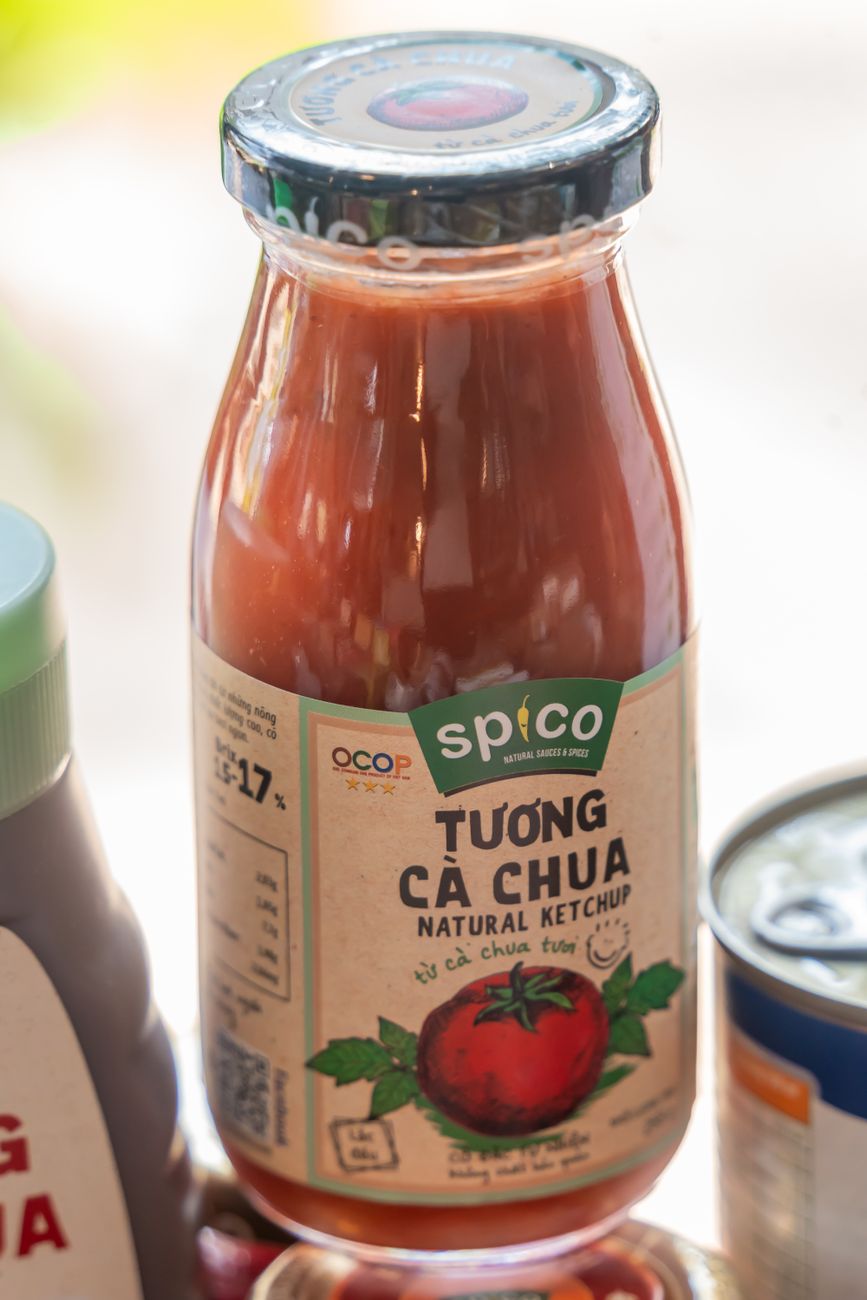
What does the FDA actually mean by 'natural flavor'?
The FDA defines the term in the Code of Federal Regulations, Title 21, Section 101.22. Under that definition, a natural flavor is any flavoring substance whose functional role is taste or aroma, and whose origin is a plant, animal, seafood, dairy product, egg, or fermentation process. Origin is the only requirement. The way the substance is processed afterward — which can involve solvents, distillation, and concentration — is not part of the definition.
That is a deliberately wide boundary. A strawberry-flavored yogurt and a mass-market chip seasoning can both list 'natural flavors' while containing entirely different sets of compounds. The word 'natural' in this context is a regulatory category, not a description of simplicity or minimal processing.
What the definition does not cover is equally important. If a substance is added mainly for nutrition, color, or preservation, it cannot legally shelter under the natural flavor label. So what ingredients qualify must serve a taste or smell function first and foremost.
How many individual compounds can one 'natural flavor' entry hide?
Flavor houses — specialist companies that formulate flavors for food brands — often blend anywhere from a handful to well over a hundred distinct compounds into a single flavor system. These compounds might include esters, aldehydes, terpenes, lactones, and other aromatic molecules, all derived from qualifying natural sources. The finished blend is then sold to the food manufacturer as a single ingredient.
When that manufacturer lists 'natural flavors' on a label, they are reporting the blend as one entry, because that is how they received it and because federal labeling rules do not require disclosure at the compound level. Open Food Facts data on thousands of products shows 'natural flavors' consistently ranking among the top ten most frequently appearing entries, yet the term reveals almost nothing about what ingredients are actually present.
There is no upper limit set by the FDA on how many compounds a natural flavor blend can contain, provided all components meet the source definition. This is why food scientists sometimes describe it as one of the most opaque entries on any ingredient list.
Can natural flavors come from animals?
Yes, and this surprises many shoppers. Animal-derived natural flavors can be sourced from meat, seafood, poultry, eggs, dairy, or their byproducts. A common example is castoreum, a secretion from beaver glands that has historically been used to add vanilla-adjacent notes. While its use is now rare due to cost and supply challenges, it remains a legally permissible natural flavor source under FDA rules.
More routinely, flavors labeled simply as 'natural flavors' in items like crackers, chips, or sauces can derive from chicken stock concentrates, anchovy extract, or dairy whey. None of these sources need to be named separately unless they belong to one of the nine major allergens defined by the Food Allergen Labeling and Consumer Protection Act — milk, eggs, fish, shellfish, tree nuts, peanuts, wheat, soybeans, and sesame.
For vegans, vegetarians, or people following religious dietary laws, this creates a real gap between what the label shows and what the product contains. The only reliable path is to contact the manufacturer directly or look for certified vegan or halal seals, which impose their own sourcing standards independent of FDA labeling rules.
Are allergens protected, at least?
Partially. If a natural flavor is derived from one of the nine major allergens, the manufacturer must declare that allergen somewhere on the label, either within the ingredient list or in a separate 'Contains' statement. This is a requirement under federal allergen labeling law, not a voluntary practice.
However, non-major allergens — celery, mustard, lupin, and others recognized in the European Union but not in the US — do not carry the same protection under US rules. Someone reacting to one of those sources would find no clue in the phrase 'natural flavors'. If you have a confirmed allergy to a non-major allergen, always read the physical label, call the manufacturer, and consult your healthcare provider. InZoRAH can surface the source categories behind a product's label, but it is not a substitute for clinical allergy guidance.
What ingredients are typically used to build a 'natural vanilla flavor'?
Vanilla is a useful case study because it is one of the most heavily flavored notes in processed food. Genuine vanilla extract comes from vanilla beans and contains vanillin as its primary compound alongside dozens of minor aromatic molecules. That meets the natural flavor definition cleanly.
But a product labeled with 'natural vanilla flavor' may instead use vanillin derived from lignin, a byproduct of the wood pulp industry, or from guaiacol produced through fermentation. Both routes qualify as natural under FDA rules because the starting materials are biological. The resulting vanillin molecule is chemically identical to what a vanilla bean produces, but the production path is very different from what most consumers picture.
This gap between consumer expectation and regulatory reality is precisely the reason the term draws so much scrutiny. The flavor tastes similar; the sourcing story is not.
Do natural flavors pose safety concerns?
For most people, no. The FDA requires that all flavoring substances, natural or artificial, be either GRAS — generally recognized as safe — or approved as a food additive before use. The Flavor and Extract Manufacturers Association also maintains its own safety review program, and its conclusions feed into FDA GRAS determinations.
That said, GRAS status is not the same as exhaustive independent safety testing. Some flavoring compounds have been reviewed on relatively limited data, and the cumulative effect of consuming many different natural flavor blends across an entire diet is not a question that has been settled by research. OpenFDA enforcement records do not show natural flavors as a frequent driver of recalls, which is a meaningful but limited reassurance.
The more practical concern for most shoppers is not toxicity but transparency: if you are managing an allergy, a dietary restriction, or simply trying to understand what you are eating, 'natural flavors' gives you almost no actionable information on its own.
What can you actually do when you see 'natural flavors' on a label?
The first step is checking whether any of the nine major allergens are declared elsewhere on the label. If they are not, and your concern is one of those allergens, you have reasonable assurance that the natural flavor does not derive from it. For non-major allergens or vegan concerns, that assurance does not exist.
Contacting the brand is the next step. Many manufacturers will confirm general sourcing categories — plant-based versus animal-based — though they typically will not reveal the full formulation, which is considered proprietary. Some brands, particularly those marketing to vegan or clean-label audiences, voluntarily confirm that their natural flavors are plant-derived on their websites or customer service lines.
InZoRAH pulls together publicly available data from sources including USDA FoodData Central and Open Food Facts to flag which products carry this ambiguous entry and suggest alternatives with more transparent ingredient lists. When you scan a label, that context can help you decide whether a follow-up call to the brand is worth making.
Longer term, advocacy organizations have pushed for more granular disclosure rules. As of the date of this post, the FDA has not revised the core natural flavor definition, so the current level of opacity remains the legal standard.
- Check the allergen statement for the nine major allergens — it is legally required if applicable.
- Look for third-party certifications (vegan, halal, kosher) that impose their own sourcing standards.
- Email or call the brand to ask whether their natural flavors are plant- or animal-derived.
- Compare products using Open Food Facts or InZoRAH to find options with more specific ingredient disclosures.
- For any confirmed allergy, always read the physical label and speak with a medical professional.
How is 'natural flavor' different from 'artificial flavor'?
The distinction is entirely about origin, not about chemical complexity or safety. Artificial flavors are synthesized from petroleum-derived or other non-biological starting materials. Natural flavors begin with a biological source. Once both types are processed, the final aromatic compounds can be chemically identical — the same molecule, produced by different routes.
This means that in some cases, a natural flavor requires more processing steps than an artificial one to arrive at the same end compound. 'Natural' does not automatically mean less processed. It is a sourcing label, and understanding that reframes what ingredients the term actually describes.
| Source category | Typical flavor contribution | Relevant to whom |
|---|---|---|
| Vanilla bean / lignin-derived vanillin | Sweet, vanilla note | General consumers |
| Chicken or beef extract concentrates | Savory, umami depth | Vegans, vegetarians, halal |
| Anchovy or shellfish extract | Savory baseline in snacks | Fish/shellfish allergy sufferers |
| Citrus peel oils | Bright citrus top note | General consumers |
| Dairy whey fermentation | Creamy, buttery note | Milk allergy, vegans |
| Castoreum (beaver gland, rare) | Vanilla-adjacent warmth | Vegans, general consumers |


